
Constance’s Changing Life
We Have Always Lived in the CastleThis flow traces Constance Blackwood’s movement from fearful domestic confinement toward tentative openness, then back to a seclusion she actively chooses with her sister.
increasing Bearing strength in each event
 decreasing
Bearing strength in each eventdecreasingA World Within the Garden
A World Within the Garden
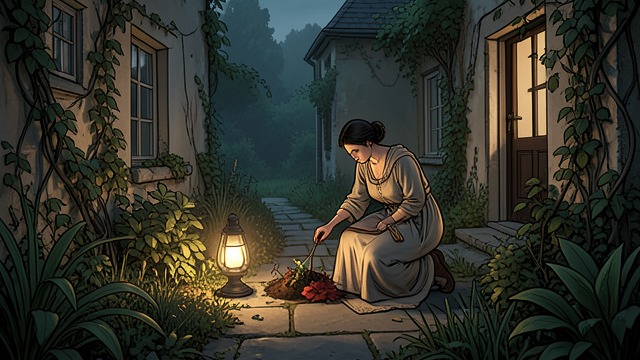
Confinement as routine
Constance stays within her own garden and tends the house, food, and surviving family. Her careful domestic life provides structure after the poisoning and trial.
A sheltered reputation
Visitors such as Helen Clarke come to the house, but Constance does not return their calls or venture into the Village. The house makes ordinary social life feel distant and manageable.
Her confinement protects her from public scrutiny, yet it also leaves her dependent on routines that keep the past present. The stability is comforting and limiting at once.
The First Possible Step
The First Possible Step
An invitation to return
Helen Clarke urges Constance to rejoin the world, suggesting small calls and outings rather than an abrupt transformation. Constance listens instead of rejecting the suggestion outright.
Mary Katherine’s alarm
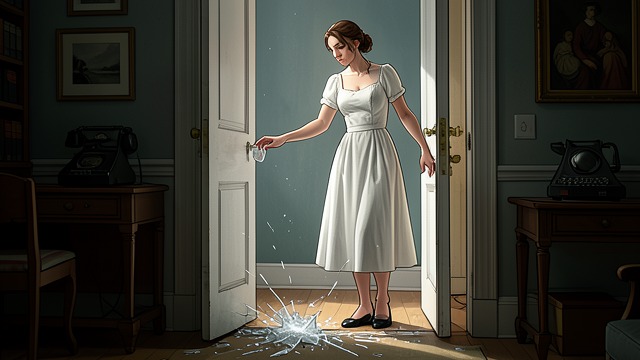
Mary Katherine recognizes the possibility of change and reacts with panic, breaking a treasured milk pitcher before returning to the guests. Her resistance reveals how strongly the sisters’ lives depend on Constance remaining at home.
Constance has not yet decided to leave, but the possibility now exists between the sisters. A new future becomes emotionally consequential before it becomes practical.
Charles’s Encouragement
Charles’s Encouragement
A different standard of care
Charles criticizes the household’s old habits and encourages Constance to consider ordinary life, including care for Julian and a future for Mary Katherine. His advice mixes practical concern with an attempt to gain influence.
Self-blame takes hold
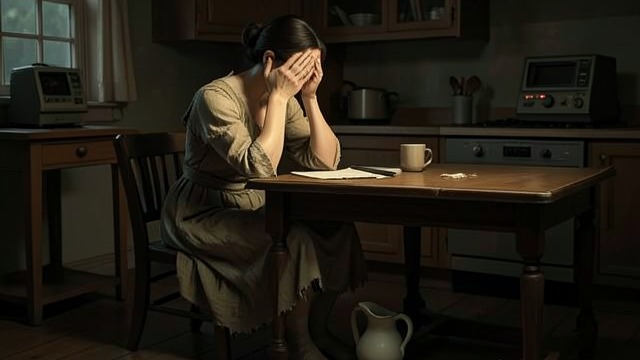
Constance begins describing the sisters’ sheltered lives as her failure. She wonders whether Julian should have received professional care and whether Mary Katherine should have been allowed to grow up differently.
Her new interpretation is not simply liberation. It gives Charles room to define what a normal life should look like and increases Mary Katherine’s fear of losing her sister.
The Night of the Fire

The Night of the Fire
Public exposure
The fire brings the Village into the house and onto the lawn. Constance hides her face with Julian’s shawl as the crowd breaks objects and turns the old rhyme against the sisters.
A sister’s hand
Mary Katherine pulls Constance away from the house when the crowd closes around them. The sisters escape together into the woods, where the immediate threat of public contact recedes.
Constance’s brief openness to the outside world ends in an experience of collective violence. The night makes isolation feel like a choice for survival rather than merely a habit.
A Chosen Seclusion
A Chosen Seclusion
Rebuilding a domestic life
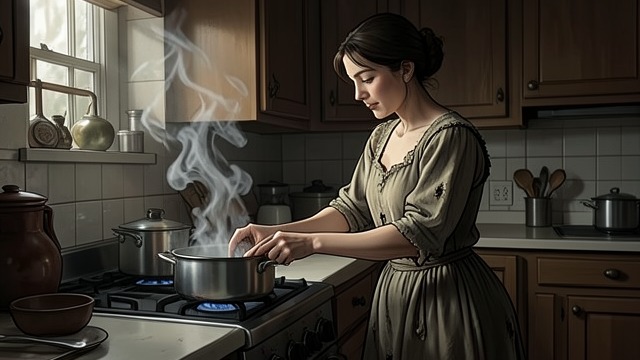
Constance cleans the kitchen, salvages food, and begins making meals again. Her practical care provides the sisters with a way to resume life amid ruin.
Refusing rescue
She does not open the door to Helen Clarke or the doctor when they arrive. Later, she and Mary Katherine treat food left by villagers as a quiet, limited connection rather than an invitation to rejoin society.
Constance ends in a more active form of seclusion: she knows the outside world is available but chooses the terms of its access. Her closeness with Mary Katherine becomes the center of that decision.
At the beginning of the story
After Helen Clarke’s spring tea visit
During Charles’s first week at Blackwood house
On the night of the house fire and village attack
From the morning after the fire to the ending
